Turnkey commercial EV charging, from strategy to managed savings
Here’s what most projects miss. Your utility doesn’t just bill you for the electricity you use — it bills you for the highest rate at which you ever drew it. We’ve watched chargers get switched on and quietly become the most expensive system in the building. So we do all three parts: size the project, install any brand, then manage the load once it’s live.
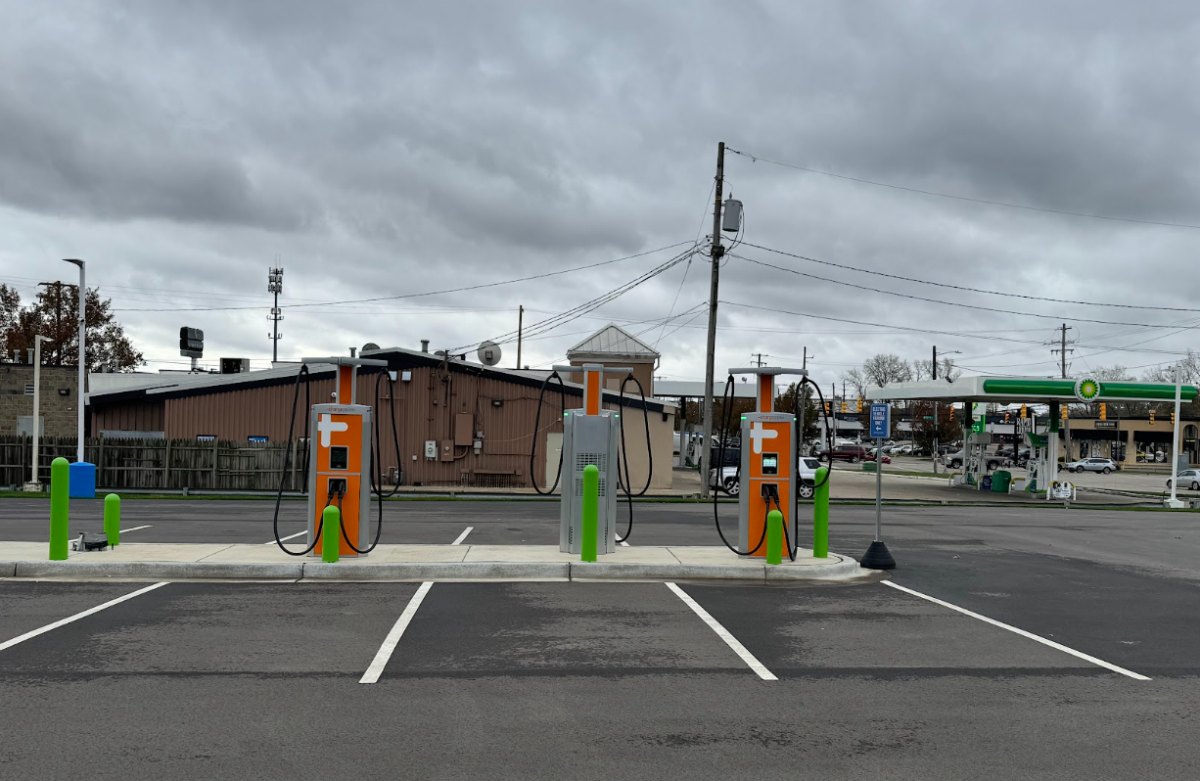
Consult, install, manage — one party for all three
Most projects split these across a consultant, an electrician, and whoever’s left holding the utility bill. Everyone does their job. We’ve just seen too many sites where the cost lives in the seams between them.
Consult →
Feasibility, site assessment, electrical capacity, utility coordination, rate analysis, and incentive strategy — before you spend on steel.
Install →
Certified installation of any manufacturer’s hardware — permitting, electrical, interconnection, and commissioning, fully turnkey.
Manage →
Energy Guardian shapes charger load against your exact utility tariff in real time, cutting demand charges 35–55% after go-live.
You’re billed for power, not just electricity
Here’s the key point. At home, you’re charged for how much electricity you use. On a commercial bill you’re charged for that, and for the highest rate at which you ever drew it — your peak power, measured in one 15-minute interval. EV charging can pull as much power as several large supercenters running at once. That makes power, not consumption, the biggest cost driver on your bill.
So the quote you get for chargers is rarely the cost of the project. How many times have we seen a customer look at the charging quote as if that’s the number, when the real cost of running the site turned out to be several times higher? The questions that decide it are unglamorous ones. Is that charger tied to the existing building load? And of your utility’s many rate schedules, which one should you actually be on? How demand charges are calculated →
What managing the peak is worth
Most vendors say load management saves money. Almost none publish the interval data. These are meter readings from two dealerships, 30-day periods.
Higher-volume deployment, DC fast included
Mixed deployment, mid-Atlantic utility
Read the Apple Ford interval data → · See the Berger Chevrolet numbers →
Figures are drawn from Energy Guardian meter and charger telemetry for the periods stated, estimated against modeled unprotected peak demand at the applicable tariff, and published with each client’s permission. Results vary by site, utility, and rate schedule. If your tariff has no demand charge, you don’t need this — and we’ll tell you so.
Built for sites where the meter is already busy
Anywhere a few high-power sessions land on top of an existing building load.
Dealerships →
The OEM timelines make sense — there’s product to move, and we understand where that pressure comes from. The utility bill just shows up three months after go-live.
Fleets & depots →
When the yard returns at end of shift and every vehicle plugs in at once, the spike is scheduled — not random.
Multifamily →
Shared meters and thin operating margins, where an unplanned demand charge decides whether charging makes money.
Parking operators →
Revenue chargers that shouldn’t erase their own margin at the meter.
Public sector →
Cities, counties, K–12, higher ed, transit, and nonprofits — available on Sourcewell #041525-EVRY, no RFP required in most jurisdictions.
Not sure where you fit →
See every vertical we serve, or start with the estimator and we’ll take it from there.
What people actually ask
How much does commercial EV charger installation cost?
Can smart EV charging reduce peak demand charges in my building?
What is load management for workplace EV charging?
What’s the difference between load management and load balancing?
How do I set up EV charging at my business?
Can a public agency buy EV charging without running an RFP?
Every utility, tariff, and site is different
The fastest way to find out what your site actually costs to run is a short conversation. Or run the numbers yourself first — no signup to see your number.
Book a 15-minute conversation → Run the demand charge estimator